Managing Stress — What Actually Helps
Chronic stress shows up physically more often than people expect: muscle tension, headaches, disrupted sleep, digestive issues. We see it in patients of every age, from stressed-out teens to exhausted new parents.
How Stress Shows Up Physically
Muscle tension and pain
Stress tends to concentrate in the neck, shoulders, and jaw for a lot of people — often without them fully realizing how much tension they're carrying.
Headaches
Tension-type headaches are one of the most common physical manifestations of chronic stress we see.
Sleep disruption
A dysregulated nervous system makes it harder to wind down at night, creating a cycle where poor sleep then makes stress harder to manage.
Digestive issues
The gut and nervous system are closely connected, which is part of why stress so often shows up as digestive discomfort.
How We Approach It
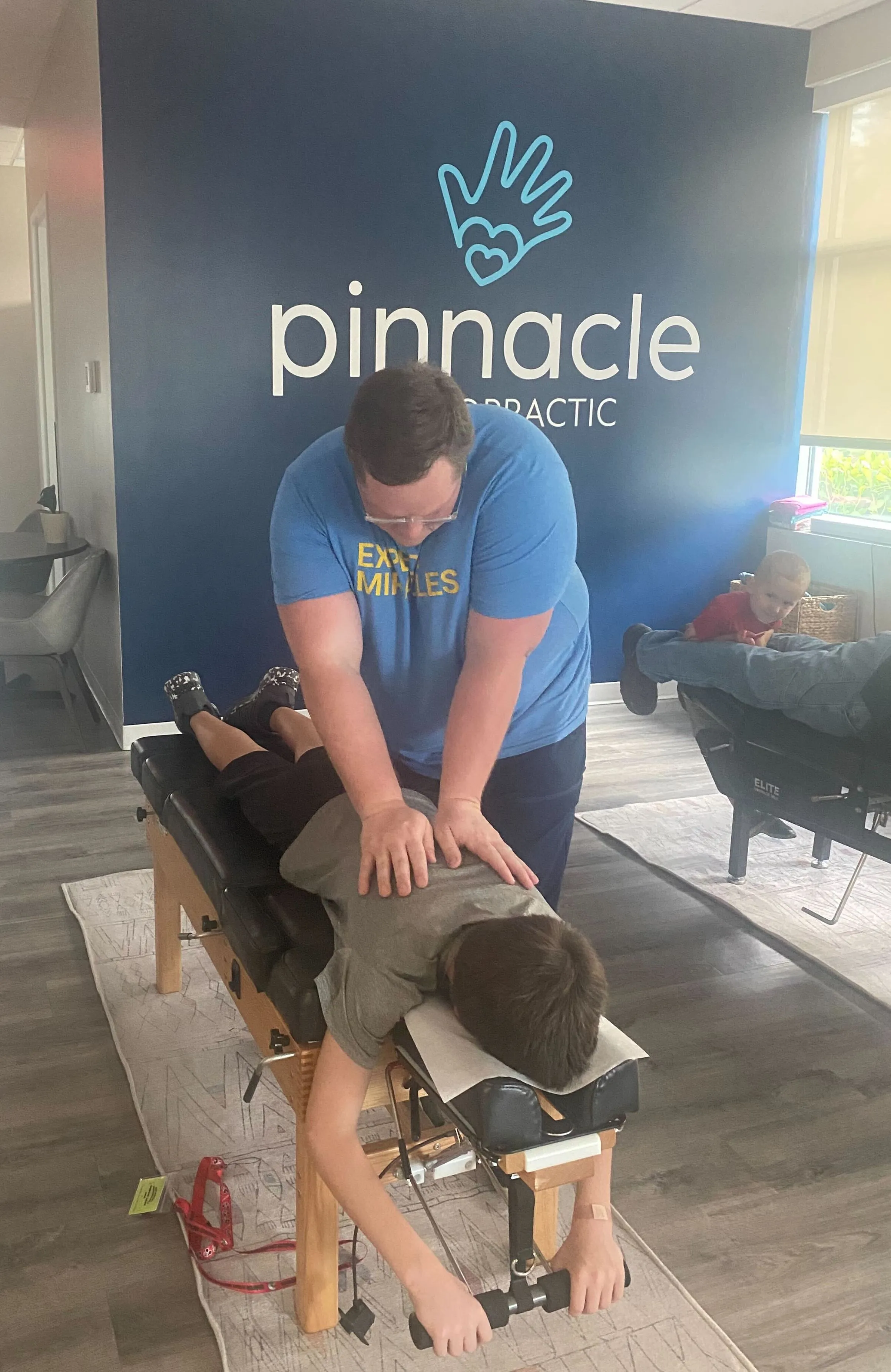
Chiropractic adjustments
Aimed at easing physical tension tied to stress and supporting better nervous system regulation overall.
Practical suggestions
Breathing techniques, basic sleep hygiene, realistic changes — not a full lifestyle overhaul that's hard to sustain.
Honest limits
Chiropractic care isn't therapy, and we'll say so if that's what's actually needed for what you're dealing with.
Stress in Kids Specifically
Kids carry stress too, often in ways that look like behavior issues rather than obvious anxiety. See our piece on school stress in kids and our guide to building a calming bedtime routine.
When to Look Beyond Chiropractic Care
If stress is tipping into ongoing anxiety, depression, or something that's affecting daily functioning, that's a conversation for a therapist or physician — we're glad to work alongside that care, not instead of it. See our broader piece on the connection between mental health and the nervous system.
Frequently Asked Questions
Can chiropractic care treat anxiety or depression?
No — those are medical/mental health conditions that need diagnosis and treatment from a qualified provider. Chiropractic care may support the physical symptoms that come along with stress, but it isn't a treatment for a diagnosed mental health condition.
How quickly can stress-related tension improve?
Some patients notice relief after a visit or two; for chronic, long-standing tension, it typically takes a more sustained approach.
Is stress-related care different from a regular visit?
Not structurally — we'll just focus the conversation and assessment on stress-related tension patterns specifically.
Schedule a Visit
Contact us — Phone: 941-822-8828, 7984 Cooper Creek Blvd, Suite 104, Bradenton, FL 34201. Serving families throughout Sarasota, Bradenton, Lakewood Ranch, Parrish, Venice, and University Town Center.
.webp)
.webp)